wp_enqueue_style('font-awesome', 'https://cdnjs.cloudflare.com/ajax/libs/font-awesome/6.5.0/css/all.min.css'); Skip to main content

I-Fatoss University

i-FATOSS University — Header

IFATOSS University Accreditation – Is IFATOSS University Accredited? [Full Guide 2025]

IFATOSS University Accreditation

Table of Contents

  1. Introduction: Why Accreditation Matters
  2. What Is Accreditation?
  3. Overview of IFATOSS University
  4. IFATOSS University Accreditation – The Recognitions It Holds
      4.1 MESRS Accreditation
      4.2 International Accreditation and Recognition
      4.3 Evaluation by CAMES
  5. Why Students Ask: “Is IFATOSS University Accredited?”
  6. Benefits of Studying at an Accredited University Like IFATOSS
  7. IFATOSS University vs. Non-Accredited Institutions
  8. How to Verify IFATOSS University Accreditation
  9. Future Accreditation Expansion
  10. How to Apply to IFATOSS University
  11. Final Thoughts: Why Accreditation Should Be Your First Priority
  12. Frequently Asked Questions (FAQ)
IFATOSS University Accreditation

IFATOSS University Accreditation

Introduction: Why Accreditation Matters

When it comes to pursuing higher education, one of the most critical factors students consider is university accreditation. Accreditation determines whether an institution is officially recognized, whether its certificates are valid, and if its graduates are respected in the job market. For students looking at universities in the Republic of Benin, IFATOSS University Accreditation has become a top search and concern.

Is IFATOSS University Accredited? Yes, it is! But let’s explore in detail what accreditation means, how IFATOSS University is recognized, and why this matters so much to Nigerian and other international students seeking quality education in West Africa.


What Is Accreditation?

IFATOSS University Accreditation

Accreditation is an official process where an educational institution is evaluated to ensure it meets established standards of quality and integrity in teaching, learning, and administration. Accreditation:

  • Validates the legitimacy of a university.
  • Ensures its programs are recognized globally.
  • Helps students gain easier access to further education and employment.

Understanding IFATOSS University Accreditation will give you the peace of mind that your academic journey is secure and valuable.


Overview of IFATOSS University

IFATOSS University is one of the rapidly growing private universities in the Republic of Benin. It has gained attention for offering quality education across disciplines such as:

  • Engineering
  • Management Sciences
  • Computer Science
  • Mass Communication
  • International Relations
  • Health Sciences

With a growing reputation and modern campus infrastructure, the question remains: Is IFATOSS University Accredited?

Let’s dive into the facts.


IFATOSS University Accreditation – The Recognitions It Holds
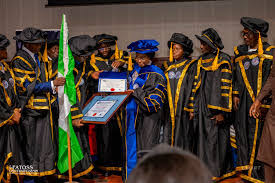
IFATOSS University Accreditation

1. MESRS Accreditation

The Ministry of Higher Education and Scientific Research (MESRS) is the authoritative body overseeing university education in Benin Republic. IFATOSS University Accreditation has been granted by MESRS, which means:

  • The university is recognized by the government.
  • Its certificates are legally valid.
  • Students can confidently use their credentials in Benin and abroad.

This answers the popular question: Is IFATOSS University Accredited? Absolutely—through MESRS, the highest educational body in the country.

2. International Accreditation and Recognition

Apart from local recognition, IFATOSS University Accreditation extends to several international bodies. The university’s partnerships and academic exchanges with foreign universities provide:

  • Global credibility.
  • Dual certification opportunities.
  • Improved chances of foreign postgraduate admissions.

3. Evaluation by CAMES

The African and Malagasy Council for Higher Education (CAMES) is a top regional accreditation body. IFATOSS University is under evaluation for full CAMES accreditation, which will add even more value to its qualifications and allow graduates to work across francophone and other African countries.


Why Students Ask: “Is IFATOSS University Accredited?”

This question isn’t just about curiosity. Students want to avoid fake institutions and diploma mills. IFATOSS University understands this and has taken every step to meet regulatory, academic, and infrastructural standards that solidify its position as a fully accredited and trusted university.

You can verify IFATOSS University Accreditation on the official MESRS list of approved institutions. This transparency has helped thousands of Nigerian students to study with confidence.


Benefits of Studying at an Accredited University Like IFATOSS

1. Global Recognition of Your Degree

An accredited degree from IFATOSS University means you can:

  • Apply for NYSC in Nigeria.
  • Continue postgraduate studies abroad.
  • Qualify for international scholarships.

2. Employer Trust

Employers trust degrees from accredited universities. IFATOSS University Accreditation ensures your CV won’t be rejected for lack of legitimacy.

3. Opportunity for Further Certifications

With a valid degree, you can easily apply for:

  • Professional licenses
  • Government jobs
  • International equivalence certificates

4. Easy Transfer of Credits

Students who wish to transfer to another institution within Benin Republic or abroad can easily do so if they study in an accredited university like IFATOSS.


IFATOSS University vs. Non-Accredited Institutions

CriteriaIFATOSS UniversityNon-Accredited Institutions
Government RecognitionMESRS approvedNot recognized
Degree ValidityAcceptable for NYSC & jobsRisk of rejection
Quality AssuranceRegular evaluationsNo standard oversight
Employer AcceptanceTrustedQuestionable
Global RecognitionExpanding partnershipsLimited or none

The difference is clear—IFATOSS University Accreditation gives you a competitive advantage.


How to Verify IFATOSS University Accreditation

You can confirm accreditation by:

  1. Visiting the MESRS Official Website
  2. Checking the list of approved universities
  3. Searching for “IFATOSS University”

Alternatively, you can call or visit the university’s administration to get official documentation or guidance. Always ask for proof before enrolling anywhere.


Future Accreditation Expansion

IFATOSS University is continuously working toward:

  • Full CAMES accreditation.
  • Expansion into new degree programs.
  • International academic collaborations.

This ensures that IFATOSS University Accreditation will remain valid, powerful, and respected for years to come.


How to Apply to IFATOSS University (Now That You Know It’s Accredited)

IFATOSS University Accreditation

Since you’ve confirmed IFATOSS University Accreditation, it’s time to consider applying. The process is simple:

  1. Visit the official school portal.
  2. Choose your desired program.
  3. Submit your application and required documents.
  4. Await admission confirmation.

Final Thoughts: Why Accreditation Should Be Your First Priority

Don’t gamble with your future. Every student deserves quality education backed by legal and official recognition. IFATOSS University Accreditation ensures you’re on the right path.

Whether you’re a Nigerian student looking for NYSC eligibility or an international student wanting global certification, IFATOSS is a university you can trust.


Apply now to IFATOSS University and secure your future with an accredited degree that opens doors in Nigeria, across Africa, and beyond.
Visit the official IFATOSS University portal today and begin your academic journey with confidence.


Frequently Asked Questions (FAQ)

1. Is IFATOSS University Accredited?

Yes, IFATOSS University is officially accredited by the Ministry of Higher Education and Scientific Research (MESRS) in Benin Republic.

2. Can I serve in NYSC with an IFATOSS University degree?

Yes, IFATOSS graduates are eligible for NYSC as long as they meet other Nigerian requirements.

3. How do I verify IFATOSS University Accreditation?

Check the MESRS official list of approved universities or contact the university administration directly.

4. Is IFATOSS University recognized internationally?

Yes, IFATOSS University has international collaborations and is pursuing further global accreditation such as CAMES.

5. What programs does IFATOSS University offer?

Programs include Engineering, Computer Science, Management, Mass Communication, International Relations, and Health Sciences.

See More Related: https://ifatossuniversity.edu.bj/2025/06/26/requirements-to-study-engineering-at-ifatoss-university-in-benin-republic/

Leave A Reply

Your email address will not be published. Required fields are marked *

LIST OF COURSES

Faculty of environmental Science

Advancing scientific knowledge through rigorous teaching, practical research, and innovative applications across the natural and applied sciences.

Urban and Regional Planning

Urban and Regional Planning, designed to train professionals in creating sustainable and well-organized urban spaces.

Estate Management Environmental Science

These programs prepare students for careers in property management, environmental sustainability, and urban development.mediating between English and French speakers.

Quantity Surveying

Quantity Surveying is a professional course focused on the financial and contractual management of construction projects. It trains students to accurately measure building works, prepare bills of quantities, estimate project costs, control budgets, and ensure value for money throughout the construction process. Graduates are equipped to work as cost consultants, contract managers, or project cost analysts in both public and private sectors.

Building Technology

Building Technology is a practical and technical course that covers the principles and methods of constructing safe, sustainable, and durable buildings. It combines knowledge of materials, structural systems, construction techniques, and industry standards. Students learn how to design and supervise construction work from foundation to finishing, ensuring buildings meet functional and regulatory requirements.

Estate Management

Estate Management focuses on the efficient utilization, development, and administration of land and property assets. The course teaches property valuation, land use planning, facility management, real estate law, and investment analysis. Graduates can work as estate managers, property consultants, valuers, or real estate developers, helping clients maximize the value and productivity of property portfolios.

LIST OF COURSES

Faculty of Arts and Humanities

Empowering students with the knowledge and skills needed to excel in business, leadership, and organizational management.

Mass Communication

Mass communication is the process of imparting and exchanging information through mass media to large segments of the population. It is usually understood for relating to various forms of media, as its technologies are used for the dissemination of information, of which journalism and advertising are part.

French Language Communication

French language Communication develops your use of the French language and culture and develops your communication skills for the professional global environment. It helps you to achieve a good or high level of linguistic proficiency in French in reading, writing, listening and speaking. It also gives you insight into and practice in communicating internationally as well as mediating between English and French speakers.

Journalism

Journalism is the activity of gathering, assessing, creating, and presenting news and information. It is also the product of these activities.

Linguistics

Linguistic is, broadly, the scientific study of language, and many topics are studied under this umbrella. Linguistics is a formal study of the sound system.

Theatre Arts

Theatre Arts is a creative and performance-based course that focuses on drama, acting, directing, scriptwriting, and stage production. It combines theory and practical training in performance, dramatic literature, stage management, and media production. Graduates can pursue careers in acting, filmmaking, broadcasting, event production, and other areas of the creative and entertainment industry.

LIST OF COURSES

Faculty of Social Science

Advancing scientific knowledge through rigorous teaching, practical research, and innovative applications across the natural and applied sciences.

International Relations and Diplomacy

International relations refer to a field of study and practice focused on understanding the unique relationships that exist between various nations and cultures. These relationships can impact everything from international politics, law, and economics to security, diplomacy, and governance.

Political Science

Political science is the study of politics and power from domestic, international, and comparative perspectives. It entails understanding political ideas, ideologies, institutions, policies, processes, and behavior, as well as groups, classes, government, diplomacy, law, strategy, and war.

Economics

Economics is a social science concerned with the production, distribution, and consumption of goods and services. It studies how individuals, businesses, governments, and nations make choices about how to allocate resources.t management, information-technology management, research and development, and marketing.systems.

Sociology

Sociology is the study of social life, social change, and the social causes and consequences of human behavior. Sociologists investigate the structure of groups, organizations, and societies, and how people interact within these contexts.

Intelligent and Security Studies

Intelligence and Security Studies is an undergraduate programme which examines how security and intelligence agencies operate their environment, and how their products represent a key component successful governance.

Public Administration

Public administration is the implementation of government policy and also an academic discipline that studies this implementation and prepares civil employees for working in the public service. Public administrators are public employees working in public departments and agencies, at all levels of government.

Psychology

Psychology is the scientific study of human behavior, emotions, and mental processes. The course explores areas such as cognitive psychology, developmental psychology, social behavior, personality, and mental health. Students learn research methods, counseling techniques, and behavioral analysis, preparing them for careers in clinical practice, education, human resources, research, and social services.

LIST OF COURSES

Faculty of Management Science

Empowering students with the knowledge and skills needed to excel in business, leadership, and organizational management.

Accounting

Accounting, also known as, accountancy, is the measurement, processing, and communication of financial and non-financial information about economic entities such as businesses and corporations. Accounting, which has been called the "language of business”, measures the results of an organization's economic activities and conveys this information to a variety of users, including investors, creditors, management, and regulators.

Human Resource Management

Human resource management (HRM or HR) is the strategic approach to the effective and efficient management of people in a company or organization such that they help their business gain a competitive advantage. It is designed to maximize employee performance in service of an employer's strategic objectives. Human resource management is primarily concerned with the management of people within organizations, focusing on policies and systems.

Business Administration

Business administration (also known as business management) is the administration of a commercial enterprise. It includes all aspects of overseeing and supervising business operations. From the point of view of management and leadership, it also covers fields that include office building administration, accounting, finance, designing, development, quality assurance, data analysis, sales, project management, information-technology management, research and development, and marketing.systems.

Banking and Finance

Banking and finance explores the constantly changing world of money, shares, credit and investments. Finance is an important part of our economy as it provides liquidity in terms of money or assets required for organizations, businesses and individuals to invest for the future. Banking and Finance explores the dynamic, fast-paced world of money, shares, credit and investments. ... Financial markets are very important and understanding the pricing of assets and derivative securities is vital.

Project Management

Project management is the process of leading the work of a team to achieve all project goals within the given constraints. This information is usually described in project documentation, created at the beginning of the development process. The primary constraints are scope, time, and budget.

Transport and Logistics Management

The management of transportation operations of all types, including tracking and managing every aspect of vehicle maintenance, fuel costing, routing and mapping, warehousing, communications, EDI implementations, traveler and cargo handling, carrier selection and management accounting.

Hospitality & Tourism Management

Hospitality & Tourism Management is a dynamic course that focuses on the management of hotels, resorts, travel agencies, airlines, and tourism destinations. It equips students with skills in customer service, event planning, tourism development, hotel operations, and business management. The program prepares graduates to work in the global hospitality industry, manage tourism enterprises, and promote sustainable tourism growth.

Marketing

Marketing is a business-oriented course that centers on understanding customer needs and promoting products or services effectively. It covers areas such as consumer behavior, branding, digital marketing, advertising, market research, and sales management. Students learn strategic planning and communication techniques to help businesses increase visibility, attract customers, and drive revenue growth.

LIST OF COURSES

Faculty of Pure and Applied Science

Advancing scientific knowledge through rigorous teaching, practical research, and innovative applications across the natural and applied sciences.

Microbiology

Microbiology is the study of microscopic organisms such as bacteria, viruses, fungi, and parasites. It plays a crucial role in healthcare, research, and environmental management by helping to understand and control infectious diseases.

Biochemistry

Biochemistry is the study of chemical processes within and related to living organisms. It combines biology and chemistry to explore the molecular mechanisms of life, including cells, enzymes, and DNA.

Computer Science

Computer science is one of the fastest-growing fields globally, with applications in almost every industry, from healthcare to entertainment. As technology advances, computer science professionals are essential for developing innovative software, AI, and cybersecurity solutions.

Software Engineering

Project management is the process of leading the work of a team to achieve all project goals within the given constraints. This information is usually described in project documentation, created at the beginning of the development process. The primary constraints are scope, time, and budget.

Computer Engineering

Computer Engineering combines principles of electrical engineering and computer science to design and develop computer hardware and software. It focuses on building efficient computer systems, from microprocessors to embedded devices.

Management and Information Technology

Management and Information Technology combines business management skills with IT expertise to solve organizational problems. It prepares students to manage tech-driven businesses, focusing on leadership, data analysis, and digital solutions.

Geology

Geology is the study of the Earth, including its materials, processes, and history. It helps us understand natural resources, environmental challenges, and natural disasters like earthquakes and volcanoes.